Nathan Langley

Research

My research work — papers, active projects, and the code behind them. Everything is open source and reproducible; each entry links to its full materials.

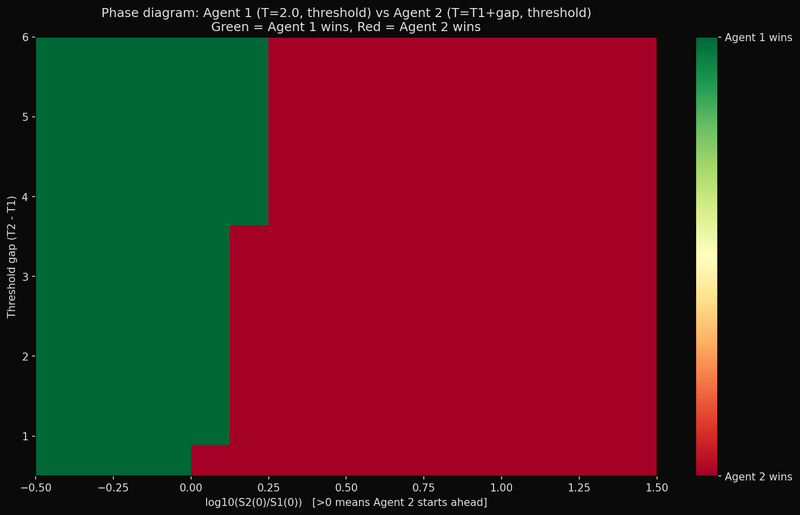
Finite-time separation figure from the singleton-attractor model

Singleton Attractors in Recursive Self-Improvement Dynamics

Nathan Langley

Preprint — 22-page paper with proofs and 11 reproducible simulations

A coupled-ODE model of when competitive recursive self-improvement collapses into single-agent dominance. Conditional theorems, calibrated against Epoch AI data.

View PDF Code
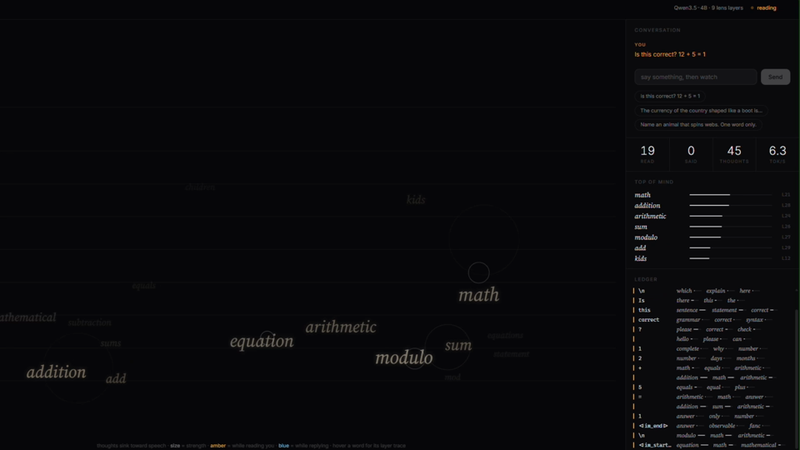
Subtext workspace visualization during the thinking phase

Subtext: real-time activation-lens interpretability

Nathan Langley

Open-source instrument — 183 GitHub stars

A Jacobian activation lens at nine depths inside a live LLM, decoding hidden states through the vocabulary. Runs in the browser, no GPU required.

Live demo Code
Confessor AI privacy report with an F grade

Confessor: forensic audits of AI coding agents

Nathan Langley

Open-source forensic tool · Node, zero dependencies, zero network calls

Reconstructs everything an AI coding agent did from the session logs already on your disk, and flags sensitive file reads followed by network calls. One command, run after the fact.

Sample report Code
Glemton ton-2 training loss curve

Glemton: a language model from scratch on consumer hardware

Nathan Langley

Full-stack training pipeline · single RTX 5070

A ~170M-parameter chat model built end to end on one GPU — tokenizer, pretraining, SFT, DPO, tool use, and a chat UI. The personality is trained into the weights, not prompted.

Code
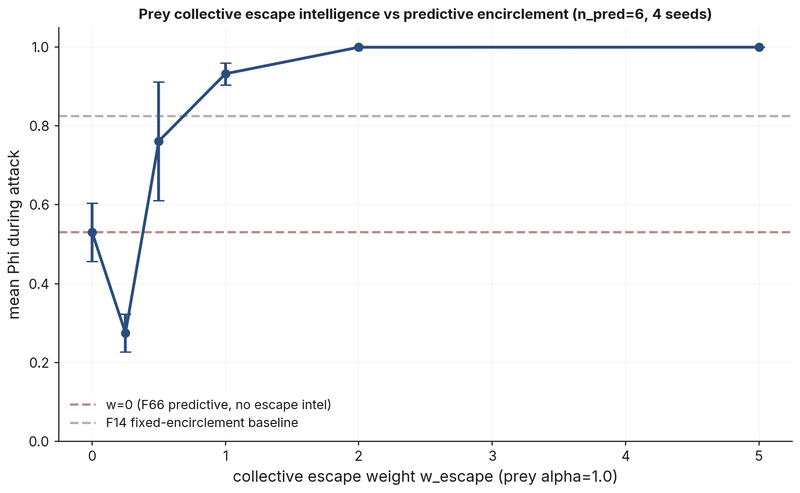
Flocking simulation from swarmsim

Emergent behavior in multi-agent systems

Nathan Langley

Computational study · undergraduate research, UNC Greensboro

Simulations of flocking, phase transitions, predator–prey dynamics, and self-organized criticality in systems of many simple agents.

Code